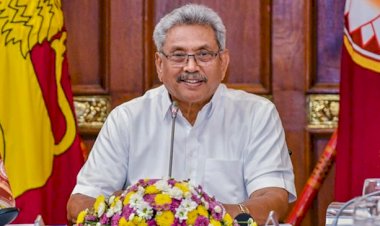



Sri Lanka's President Anura Kumara Dissanayake presents the budget for 2026
 mode1
Nov 8, 2025 01:15
152
0
mode1
Nov 8, 2025 01:15
152
0
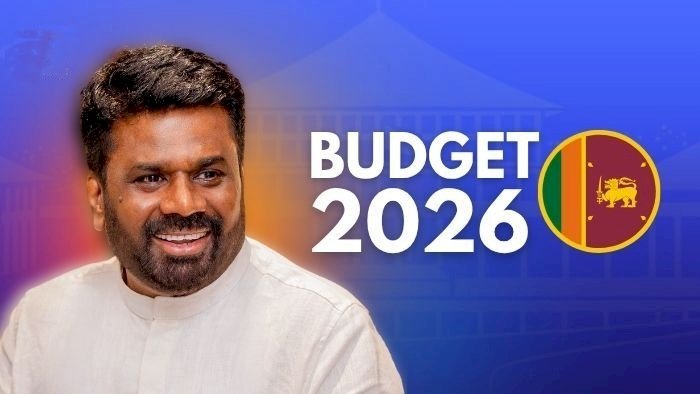
Nov. 7 – President Anura Kumara Dissanayake presented the Budget 2026 in Parliament, unveiling a series of allocations and reforms.
The proposals reflect a reform-driven and inclusive direction — highlighting investments in health services, digital infrastructure, education, and support for vulnerable groups. The budget emphasizes fiscal consolidation, digital transformation, and inclusive development, with notable investments in healthcare, transport, rural infrastructure, and welfare.
Macroeconomic & Fiscal Direction
- The 2026 Budget targets a deficit of 5.2% of GDP, reflecting continued fiscal consolidation.
- State revenue is expected to rise to 15.3% of GDP by 2026, aligning with debt sustainability targets.
- Debt-to-GDP ratio will be reduced to 95%, and further to 87% by 2030.
- Inflation will be maintained below 5% through disciplined monetary policy.
- The economy is projected to grow at 7% annually, driven by investment and productivity-led expansion.
- A competitive bidding system for government procurement is introduced to ensure fair pricing and eliminate irregularities.
- E-procurement and digital asset management systems will be launched in 2026.
- The Social Security Contribution Levy will be charged at the point of import, manufacture, or sale of vehicles, effective April 2026, exempting after-sales transactions.
- The Special Commodity Levy on imported coconut and palm oil will be replaced with the standard VAT-based tax structure, effective April 2026.
Public Sector Employment & Benefits
- All employees serving over six months under Public Administration Circulars 25/2014 and 29/2019 will be granted permanent appointments.
- Rs. 110 billion allocated for the second phase of the 2025 salary revision, effective January 2026.
- Rs. 20 billion allocated for the second phase of pension revisions.
- Distress loan limit for public servants increased from Rs. 250,000 to Rs. 400,000 at 4.2% interest, with Rs. 10 billion allocated for disbursement.
- Festive advance for public employees increased from Rs. 10,000 to Rs. 15,000.
- Agrahara Insurance Scheme contributions increased by Rs. 75 minimum and Rs. 150 for higher tiers.
- Rs. 250 million allocated to raise the railway gatekeeper allowance from Rs. 7,500 to Rs. 15,000 per month.
- 75,000 new recruits to be added to the public service in technical, revenue, and law enforcement roles.
- Rs. 12.5 billion allocated for vehicles and machinery for government institutions and to replace vehicles for outgoing parliamentarians.
Housing & Urban Development
- Rs. 15 billion under the Urban Regeneration Project to construct housing in Colombo and suburbs (Applewatta, Madampitiya, Fergusson Mawatha, Obeysekarapura, Stadiumgama, Colombage Mawatha, Torrington Place).
- Rs. 3 billion for 70,000 houses and Rs. 7.2 billion for 10,000 houses under the A Place of Your Own – A Beautiful Life” program for low-income families.
- Rs. 4.29 billion, with assistance from the Government of India, for 2,000 houses for Malayagam estate workers in multiple provinces.
- Rs. 840 million allocated for resettlement of unauthorized settlers along the Kelani Valley Railway.
- Rs. 1.18 billion to renovate old government-built apartment complexes.
- Rs. 2 billion allocated for urban development feasibility studies in 10 cities including Jaffna, Eheliyagoda, Batticaloa, Chilaw, and Matara.
- Rs. 900 million for solid waste management, equipment, and vehicles for local councils.
- Rs. 500 million to expand Matale City to four lanes and prepare a traffic management plan for Hatton.
- Rs. 100 million allocated for a pilot project for stray dog and pet management in urban areas.
Roads, Transport & Connectivity
- Rs. 34.2 billion allocated for road development, including Rs. 10.5 billion for the Central Expressway (Potuhera–Galagedara) and Rs. 20 billion for the Rambukkana–Galagedara segment.
- Rs. 1.5 billion allocated for Ruwanpura Expressway land acquisition and reassessment.
- Rs. 1 billion allocated to complete Kurunegala–Dambulla Expressway land acquisition.
- Rs. 1 billion for a comprehensive national road-safety program.
- Rs. 250 million allocated for short-term flood mitigation and Rs. 500 million for long-term flood control projects.
- Rs. 24 billion for rural road construction and Rs. 2.5 billion for rural bridges.
- Rs. 790 million for equipment upgrades at SLTB depots and workshops.
- Rs. 2.06 billion to replace engine units in 307 SLTB buses.
- Rs. 3.6 billion for 600 new long-distance SLTB buses.
- Rs. 3.3 billion to procure five new Diesel Multiple Units (DMUs) for Sri Lanka Railways.
Agriculture, Livestock & Irrigation
- Rs. 91.7 billion allocated for irrigation infrastructure, including restoration of Senanayake Samudraya, Gal Oya, Rajanganaya, Huruluwewa, and Minneriya.
- Rs. 5 billion allocated for the Lower Malwathu Oya Multipurpose Project.
- Rs. 50 million to recommence the Mundeni Aru Project.
- Rs. 3 billion for the renovation of the Milco Badalgama Factory.
- Rs. 1 billion each for cattle and swine breeding and milk production (aiming for 75% self-sufficiency by 2030).
- Rs. 600 million for the Jaffna Coconut Triangle development.
- Rs. 250 million to install solar panels at the Dambulla cold storage facility.
Fisheries & Coastal Development
- Rs. 350 million for the Valaichchenai Fishing Harbour development.
- Rs. 500 million for wharf infrastructure to improve the livelihoods of fishing communities.
- Rs. 100 million each for life-saving equipment for fishermen, satellite-based fish-ground tracking systems, and aquaculture development centres.
Health, Social Welfare & Inclusion
- Rs. 11 billion for medical faculties in state universities.
- Rs. 4.2 billion for the Suwasariya Ambulance Service.
- Rs. 1.5 billion to introduce Primary Healthcare Centres nationwide.
- Rs. 200 million to establish a National Cardiologic Hospital in Colombo.
- Rs. 250 million to provide a monthly Rs. 10,000 allowance for thalassaemia patients.
- Rs. 500 million for day-care centres for children with disabilities, including autism.
- Rs. 750 million for AI Service Centres.
- Rs. 1 billion to relocate Dambulla and Deniyaya Hospitals.
- Rs. 570 million for a Community Science and Health Survey.
- Rs. 50 million for educational support for differently-abled children, and a Rs. 5,000 monthly allowance for those pursuing higher education.
- Mahapola Scholarship increased by Rs. 2,500.
- 3% of all state recruitments reserved for persons with disabilities.
Employment, SMEs & Women’s Empowerment
- Rs. 5.9 billion in loans for small and medium enterprises.
- Rs. 800 million for a Sustainable Agricultural Loan Fund.
- Rs. 240 million allocated for self-employment and women entrepreneurs, and Rs. 200 million for women’s welfare programs.
- Estate workers’ daily wage to increase from Rs. 1,350 to Rs. 1,750 by January 2026, with a government attendance incentive.
- Rs. 2 billion from the Foreign Employment Bureau to establish a pension scheme for migrant workers in 2026.
Digital Transformation & Innovation
- All government payments to become fully digital, with no fees for QR transactions below Rs. 5,000.
- Digital ID cards to be issued by March 2026.
- Establishment of a Virtual Economic Zone to attract investment and innovation.
- Five-year tax concession for digital communication towers.
- Installation of 100 new telecom towers nationwide.
- Broadband vouchers for low-income students to improve digital access.
- Rs. 6.5 billion allocated for the Clean Sri Lanka Initiative to enhance sanitation and environmental sustainability.
Governance & Reform Commitments
- 900 state bungalows to be transformed into Public-Private Partnership (PPP) ventures.
- Introduction of a residence visa system for tourists.
- Expert committee to draft a Judicial Code of Ethics.
- The President reiterated zero tolerance for corruption:
Regardless of position, those engaging in fraud or corruption will be punished.”
Sri Lanka’s Budget 2026 positions the nation for a sustained post-crisis recovery, steering toward a resilient, technology-driven, and inclusive economy.